
If wage garnishment makes it difficult to afford your essential living costs, you can request a Claim of Exemption from the court to either lower or eliminate the garnishment. This process demonstrates that the withheld amount jeopardizes your ability to meet essential needs.
Give us a call at (877) 969-7482 now to find out how to stop your wage garnishment in California before your next paycheck is affected. We’ve helped over 10,000 clients in California stop wage garnishment and save their paychecks.
Wage garnishment in California can place a significant financial strain on individuals and families. However, it’s not an unavoidable situation. With the right strategies, you can stop or reduce garnishment and regain control of your finances.
What Is Wage Garnishment?
Wage garnishment occurs when a court mandates your employer to deduct a portion of your wages to settle specific debts, such as unpaid taxes, medical bills, credit card balances, or obligations like child or spousal support.

How Does Wage Garnishment Work in California?
Wage garnishment in California begins when creditors secure a court judgment and file a Writ of Execution along with an Earnings Withholding Order (WG-002). Once your employer receives the order, they must deduct a portion of your paycheck and send it directly to the creditor.
What Are the Limits on Wage Garnishment in CA?
Federal and California laws protect a portion of your income:
- Garnishment cannot exceed 25% of your disposable income or the amount exceeding 30 times the federal minimum wage, whichever is less.
- For child or spousal support, garnishment can reach up to 50%-60% of disposable income.
What Are California Wage Garnishment Laws?
California has specific rules to safeguard employees facing wage garnishment:
- Disposable Earnings: Garnishment applies only to income left after mandatory deductions like taxes and Social Security.
- Exemptions: Certain types of income, such as Social Security, disability benefits, and public assistance, are entirely protected.
Understanding these protections is critical to preventing undue financial hardship.
What Are the Steps to Stop Wage Garnishment in California?
The strongest steps to stop wage garnishment in California include:
- File a Claim of Exemption
- Complete Claim of Exemption (WG-006) and Financial Statement (WG-007/EJ-165) forms.
- Submit the forms to the levying officer, typically the sheriff.
- If unopposed, garnishment stops or is reduced; if opposed, a court hearing determines the outcome.
- Negotiate With Creditors
- Request a payment plan or settle the debt for a reduced amount.
- Challenge the Garnishment in Court
- Use legal grounds such as errors in calculations, expired statutes of limitations, or proof of undue hardship.
- File for Bankruptcy
- Bankruptcy imposes an automatic stay, stopping all garnishments immediately.
- Chapter 7 discharges unsecured debts, while Chapter 13 reorganizes repayment.
Taking prompt action and consulting a bankruptcy attorney can ensure your rights are protected and garnishments are resolved effectively.

What To Do When You Receive a Garnishment Order
Acting quickly after receiving an Earnings Withholding Order is crucial:
- Verify the Order’s Legitimacy: Check for errors in the garnishment amount or creditor information.
- Respond Promptly: Contact the creditor to negotiate or file a Claim of Exemption.
- Document Your Finances: Prepare a detailed financial statement showing income, expenses, and assets.
How Long Does the Wage Garnishment Process Take in California?
The timeline for wage garnishment in California varies depending on the creditor’s actions and your response. Key stages include:
- Creditor Judgment: Before garnishment begins, creditors must obtain a court judgment, which can take weeks or months.
- Writ of Execution and Earnings Withholding Order: Once approved by the court, these documents are sent to your employer, typically within 5-10 business days.
- Employer Compliance: Employers are required to start withholding wages immediately upon receiving the garnishment order.
- Stopping Garnishment: Filing a Claim of Exemption can halt or reduce garnishment within 10-30 days if approved.
Acting promptly at each stage ensures minimal disruption to your finances and maximizes the chances of stopping garnishment.
What Income Is Exempt From Wage Garnishment in California?
California law protects specific types of income to ensure individuals can meet basic living expenses. Key exemptions include:
- Exempt Income
- Social Security benefits.
- Disability payments.
- Public assistance funds.
- Wage Protections
- Garnishment cannot exceed 20% of disposable earnings or the amount exceeding 30 times the federal minimum wage.
To protect exempt funds, file an Exemptions Form with the levying officer, typically the sheriff. This step ensures protected income remains untouched.

Advanced Strategies to Stop Wage Garnishment
Negotiating With Creditors
Open communication with creditors can prevent or stop garnishment. Propose a:
- Reduced Lump-Sum Settlement: Pay less than the total amount owed.
- Monthly Payment Plan: Spread payments over time to avoid garnishment.
Bankruptcy as a Last Resort
Filing for bankruptcy offers comprehensive relief:
- Automatic Stay: Halts wage garnishment immediately.
- Debt Discharge: Eliminates eligible debts permanently under Chapter 7.
- Debt Reorganization: Creates manageable payment plans under Chapter 13.
Consult a bankruptcy attorney to determine if this option is right for you.
How to Prepare for a Wage Garnishment Hearing in California
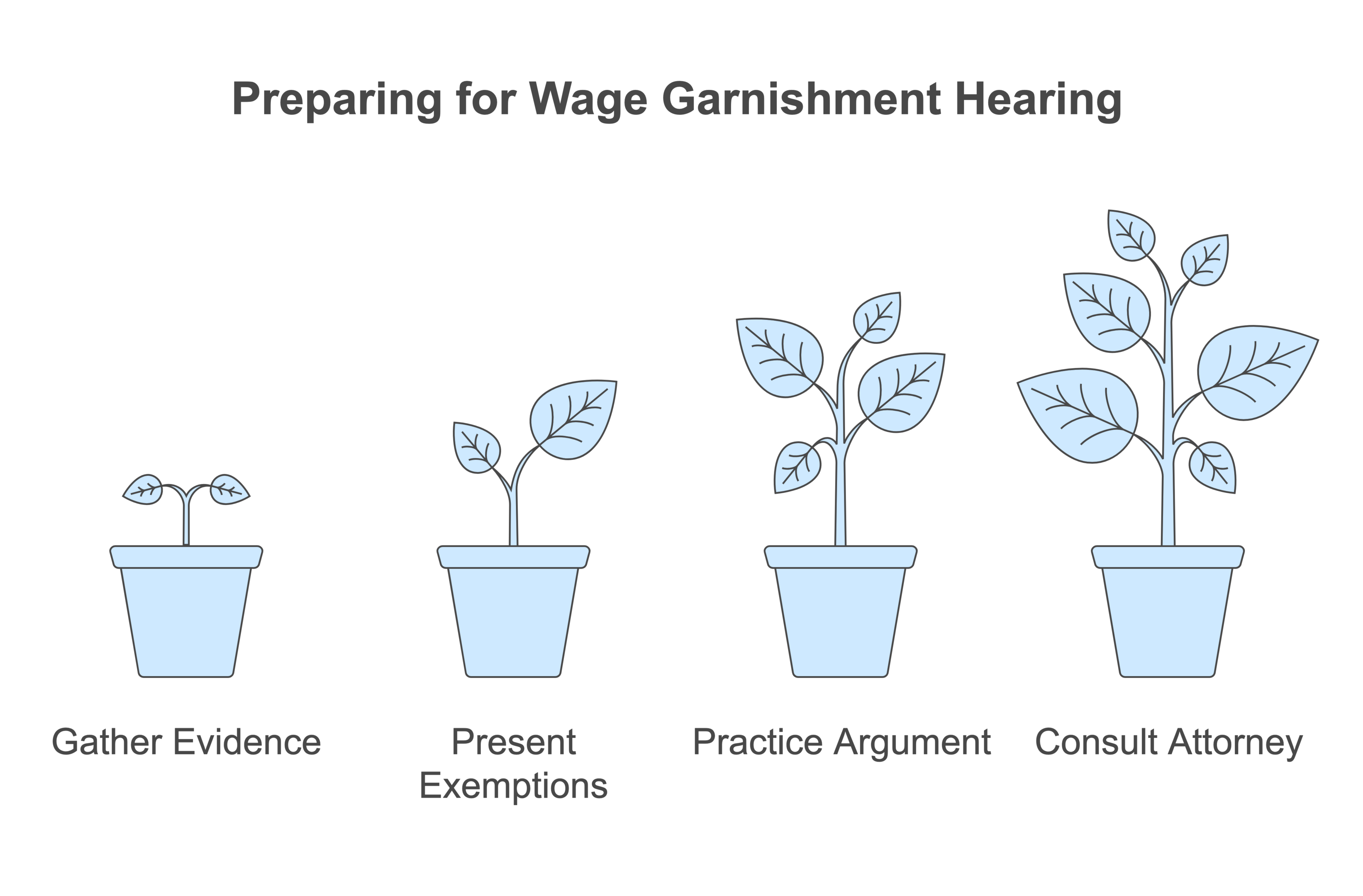
If your Claim of Exemption is opposed by the creditor, a court hearing will decide whether garnishment can continue. Preparing effectively is crucial:
- Gather Evidence: Bring documentation, including pay stubs, bills, bank statements, and financial statements, to demonstrate hardship.
- Present Exemptions: Clearly identify income that qualifies for exemptions, such as Social Security or disability benefits.
- Practice Your Argument: Be ready to explain how garnishment prevents you from meeting essential living expenses.
- Consult an Attorney: Legal counsel can help you prepare and present your case more effectively.
By demonstrating financial hardship and adhering to California’s garnishment laws, you increase your chances of winning the hearing.
How Can You Challenge Wage Garnishment in California?
You can challenge wage garnishment on the following grounds:
- Exceeding Legal Limits: Garnishment exceeds California’s threshold of 20% of disposable income.
- Debt Already Paid: Garnishment is for a debt you’ve already settled.
- Debt Not Yours: Garnishment is due to creditor error or identity theft.
What Are the Steps to Challenge Wage Garnishment
- File a Claim of Exemption
- Demonstrate financial hardship or claim exempt income (e.g., Social Security).
- Motion to Vacate Default Judgment
- Challenge the judgment if it was issued without proper notification or is inaccurate.
Taking these actions can stop or reduce garnishment and protect your income. Filing accurate documentation and acting promptly are critical to success.
Why Choose Kostopoulos Bankruptcy Law?
At Kostopoulos Bankruptcy Law, we’re dedicated to helping California residents protect their income and regain financial stability. With offices in Riverside and Oakland, we provide tailored solutions for stopping wage garnishment and resolving debt.
Contact us today at 877-969-7482 for a free no-obligation consultation to explore your options and take the first step toward financial freedom.
Related Content:
- Can Debt Consolidation Stop Wage Garnishment in California?
- How to Avoid Paying a Civil Judgement on Your Credit Report in California
- Can You File Bankruptcy on a Judgment in California?
- What Are the Costs Associated with Bankruptcy Filing in California?
- What Are the Alternatives to Bankruptcy in California?